The Ultimate Tool for Organized Creativity: Your Script Writing Logbook
For anyone who has ever tried to capture an idea, the journey from a fleeting thought to a finished script can feel chaotic. Notes are scribbled on napkins, character arcs are sketched on random sticky notes, and pivotal scene dialogue is lost somewhere between a text file and a notebook. This is where a dedicated Script Writing Logbook KDP Interior transforms a messy process into a streamlined, professional workflow. It’s not just a notebook; it’s a structured environment designed specifically for the unique needs of scriptwriting, whether for film, television, stage, or even podcasting.
Why a Dedicated Logbook Matters for Scriptwriters
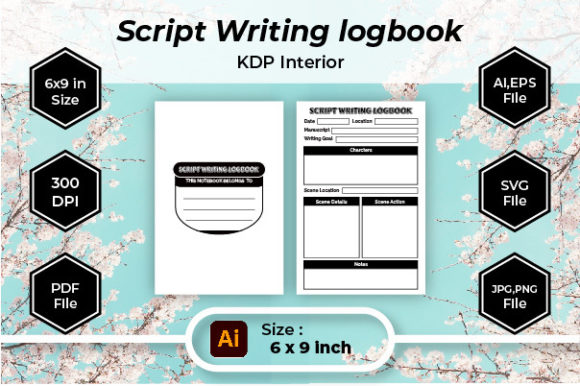
Imagine you’re developing a television pilot. You have the core concept, but now you need to flesh out the world: the characters’ backstories, the season’s episode beats, the visual motifs. Trying to manage this across multiple generic notebooks or digital documents creates friction. A Script Writing Logbook KDP Interior provides a single, cohesive home for all these elements. Its structure acts as a silent partner, guiding you to document the essentials—logline, synopsis, character profiles, scene breakdowns—in a logical sequence. This means less time organizing your tools and more time actually writing. For the solo creator working late nights or the writing partner team meeting weekly, this centralized logbook becomes the authoritative source for the project’s evolution, ensuring every idea is tracked and every revision is contextualized.
From First Draft to Final Polish: Real-World Applications
The utility of a scriptwriting logbook shines across the entire creative lifecycle. A screenwriter might use it during the initial brainstorming phase, using dedicated pages to freely explore different plot twists or thematic directions. Later, the same logbook serves as a production bible; the clearly formatted character pages ensure consistency in dialogue and motivation across 90 pages of screenplay. For a playwright, the logbook can track stage directions and prop lists alongside dialogue, keeping the practical demands of theater in sync with the artistic vision. Educators teaching creative writing courses find these logbooks invaluable as structured templates for students, providing a clear framework for learning the disciplined craft of scriptwriting. Even hobbyist writers creating web series or indie film projects benefit from the professionalism it brings to their process, making their work feel more substantial and manageable.
Beyond the Writer’s Desk: Commercial and Professional Uses
The Script Writing Logbook KDP Interior is also a powerful asset for entrepreneurs and small business owners in the content space. Consider a marketing agency that produces branded video content for clients. Using a customized version of this logbook allows them to meticulously plan client scripts, track revisions against initial briefs, and maintain a polished record of the creative process, which enhances client trust and project management. Freelance scriptwriters can use it to present their working method professionally to potential clients, demonstrating organization and thoroughness. Furthermore, the availability of the product as an editable source file (like the included AI and EPS files) means publishers, bloggers, or educators can adapt the interior to create their own branded scriptwriting journals or printable resources for their audience, adding a unique tool to their service or content offerings.
Key Features That Translate to Real Outcomes
When evaluating a Script Writing Logbook KDP Interior, it’s important to look past a simple list of file types and understand how each feature supports your real work. The editable source files (AI, EPS) mean you aren’t locked into a preset design. If your process requires a specific additional section—like a beat sheet for comedy or a visual reference page—you can add it seamlessly. The high-quality, print-ready PDF at 300 DPI ensures that if you choose to produce physical copies for a writing group or as a product to sell, the output looks crisp and professional. The 6x9 inch size, which can be resized, offers a practical balance between portability and ample writing space. This isn’t about having a SVG file; it’s about having the flexibility to create a tool that fits your exact creative or commercial workflow.
What to Consider Before Choosing Your Scriptwriting Tool
Before committing to a specific logbook interior, reflect on your actual writing habits. Do you work primarily digitally, or do you need a printable PDF to physically write in? The bundle including JPG, PNG, and PDF files caters to both. Are you planning to use this as a template for a series of journals to sell on platforms like KDP? The full suite of vector and editable source files is crucial for customization and branding. Consider also the scope of your projects. A 100-page PDF is substantial for a single feature film script but might be perfect for a TV series season arc where notes accumulate over months. The “low content” or structured interior nature means it provides the framework without restrictive, prescriptive content—it’s a canvas for your ideas, not a pre-written guide. This makes it ideal for experienced writers who know their process but need organization, as well as newcomers who benefit from the suggested structure.
Integrating the Logbook into a Modern Creative Lifestyle
Today’s creators often juggle multiple projects across different mediums. A novelist might be drafting a screenplay adaptation. A podcaster might be scripting a narrative season. This logbook serves as a project-specific anchor. By keeping a separate logbook for each major script undertaking, you create a clean mental and physical separation between projects, which helps maintain focus and prevents creative bleed. The digital file versatility also supports hybrid workflows: you can print sections for brainstorming meetings, use the PNG backgrounds for digital note-taking apps, and keep the master editable file for future iterations. It respects that modern creativity isn’t purely analog or digital—it’s a fluid blend, and your tools should accommodate that.
The Bottom Line for Creators and Entrepreneurs
Ultimately, a well-designed Script Writing Logbook KDP Interior is an investment in efficiency and professionalism. It turns the inherent complexity of scriptwriting—a discipline that requires managing plot, character, dialogue, format, and often production elements—into a structured, navigable process. For the independent writer, it reduces friction and increases the likelihood of completing that draft. For the educator or coach, it provides a reliable teaching aid. For the content business owner, it offers a customizable product template or an internal process improvement tool. By choosing a logbook that offers both print-ready quality and full editorial control via source files, you gain a resource that adapts to your needs, rather than forcing you to adapt to it. In the end, it’s about giving your ideas the organized space they need to grow from a simple logline into a compelling, finished script.