The Ultimate Tool for Your Family History: A Guide to Genealogy Organizers
Have you ever wondered about your great-grandmother's life story, or wanted to trace the origins of your surname? Genealogy, the study of family history and lineage, is a deeply rewarding pursuit that connects us to our past and strengthens our sense of identity. However, the journey from scattered notes and old photos to a coherent family narrative can feel overwhelming. This is where a dedicated genealogy organizer becomes an indispensable tool. It transforms the complex puzzle of ancestry into a manageable and enjoyable project.
What Is a Genealogy Organizer?
At its core, a genealogy organizer is a structured workbook or system designed to collect, categorize, and display family history information. It is the framework upon which you build your research. Instead of relying on loose papers, digital files in disparate folders, or fragmented memories, an organizer provides standardized templates and logical sections for every piece of data. Think of it as the binder, the filing cabinet, and the sketchpad for your ancestral story—all in one.
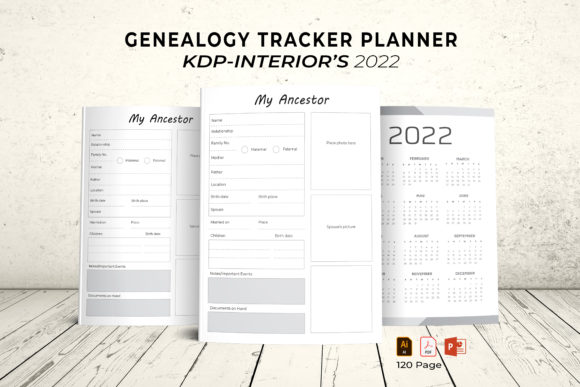
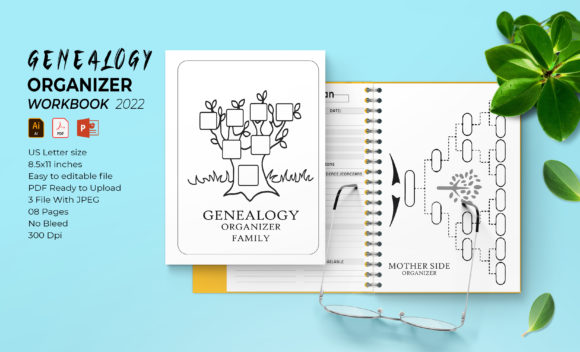
A high-quality organizer, like the featured Genealogy Organizer Workbook for Family, goes beyond a simple chart. It is a comprehensive package that guides you through the entire process, from initial interviews with relatives to the final, elegant presentation of your family tree.
The Essential Components of a Powerful Organizer
A well-designed genealogy organizer includes several key sections, each serving a unique purpose in your research journey:
- Generational Family Tree: This is the visual anchor, the classic diagram that maps relationships across generations. It provides a bird's-eye view of your lineage.
- Father Side & Mother Side Organizers: These dedicated sections allow you to bifurcate your research logically. Separating paternal and maternal lines prevents confusion and helps you delve deeper into each branch systematically.
- Family Group Sheet: A fundamental genealogy tool. This sheet focuses on a single nuclear family unit—parents and children—recording vital details like birth, marriage, death, and occupation for each member.
- Questions To Ask Your Family: Perhaps the most valuable page for beginners. It provides a curated list of prompts and interview questions to help you extract stories and facts from living relatives, capturing oral history before it's lost.
- Name Born List: A straightforward, chronological list of ancestors, serving as a quick-reference index or timeline of your family.
Each component works in harmony, creating a multi-faceted approach to documentation that accommodates both data and narrative.
The Significance and Practical Relevance of Organized Genealogy
Why invest time in organizing your family history? The benefits extend far beyond a simple hobby.
Preserving Heritage: In an era of rapid change and digital transience, a physical or well-archived digital record of your family becomes a tangible heirloom. It preserves stories, migrations, traditions, and names for future generations, giving them a rooted sense of belonging.
Medical and Historical Insight: Tracing health patterns or understanding family movements through historical events can offer personal insights into your own life and the wider socio-political landscape your ancestors navigated.
Connecting Generations: The process of creating this organizer often involves talking to older relatives, which strengthens family bonds. It can also be a wonderful collaborative project with children, teaching them about history, research, and their own place in the world.
Clarifying Common Misunderstandions
Many assume genealogy is only for those with "important" or well-documented ancestry. This is a myth. Every family's history is significant. Another misconception is that it requires expensive software or professional help. While advanced tools exist, a thoughtfully designed workbook is a perfect, accessible starting point and can remain the central repository for your work. Lastly, people often think genealogy is purely about names and dates. The Questions To Ask Your Family section specifically addresses this, emphasizing that the stories, occupations, personalities, and anecdotes are the soul of your family history.
Fitting into Modern Life: From Physical Print to Digital Flexibility
How does a genealogy organizer integrate with contemporary lifestyles and technology? The design of modern organizers answers this directly.
The featured workbook package, ready for platforms like Amazon KDP (Kindle Direct Publishing), exemplifies this integration. It is both a print-ready file for creating a tangible book you can hold and share, and a fully editable vector file using software like Illustrator or PowerPoint. This duality is crucial.
- For the Hands-On Creator: You can print the PDF at home, an office, or a print shop and fill it out by hand, enjoying the tactile experience of writing your family's story in ink.
- For the Digital Native: You can edit the Ai or PPT files on your computer, typing information, customizing colors, and even resizing the 100 included vector shapes to create a personalized digital archive that can be easily shared via email or cloud storage.
- For the Entrepreneur or Educator: The KDP-ready format means you can use this tested interior to publish your own customized genealogy workbook for a wider audience, turning a personal project into a small business or a classroom resource.
The inclusion of multiple file formats (Ai, PPT, PDF, JPEG) ensures the organizer fits into your workflow, whether you prefer advanced design software, common presentation tools, or simple, ready-to-use documents.
Examples of Natural Use
Imagine a family reunion. Instead of a casual conversation, you bring your partially filled organizer. The Family Group Sheet helps you confirm details with your aunt. The Questions page leads to a recorded interview with your grandfather about his childhood. Later, you update the digital version on your laptop, adding the new photos you scanned as JPEGs. Another example: a school project where a student uses the Generational Family Tree to map their lineage, learning about history and research skills through a personal lens.
Building a Broader Understanding: Genealogy as a Gateway
Starting with a structured organizer does more than just catalog ancestors. It opens doors to broader disciplines and deeper understanding.
The process teaches foundational research skills: verifying sources, cross-referencing information, and presenting data clearly. It often leads into local history, as you discover where your family lived and worked. It can spark interest in genetics, sociology, and even law (such as inheritance or citizenship patterns). Your organizer becomes the primary source document for all these explorations.
Moreover, completing a genealogy project fosters a unique form of creativity. You are not just collecting facts; you are curating a narrative. Deciding how to present the information, which stories to highlight, and how to design your family tree are all creative acts. The editable nature of the workbook, with its easy-to-change colors and resizable shapes, directly supports this creative expression.
The Final Outcome: A Legacy Document
When you utilize a comprehensive genealogy organizer from start to finish, you do not end with a folder of notes. You produce a legacy document. A clean, professional, and personal record that stands as a testament to your family's journey through time. Whether you choose to print it as a book for your living room shelf, save it as a PDF to distribute to cousins, or adapt its design for further publishing, the final product is a meaningful achievement.
The journey of discovery is profound, but without organization, its fruits can remain scattered. A dedicated genealogy organizer provides the map, the tools, and the canvas for that journey. It turns the admirable intention of "learning about my family" into a structured, enjoyable, and ultimately successful project, creating a lasting bridge between your past, present, and future.