A Guide to the Coffee Tasting Log Book KDP Interior for Publishers and Enthusiasts
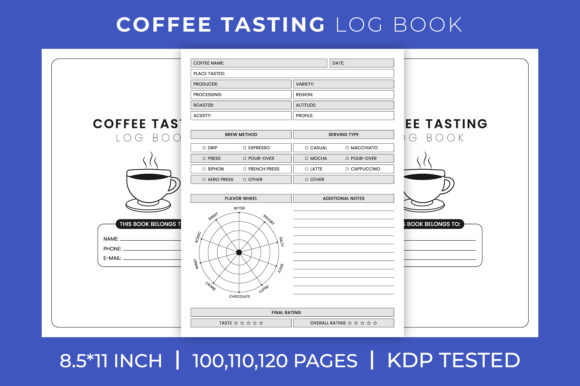
For anyone involved in the world of specialty coffee or self-publishing, the term "Coffee Tasting Log Book – KDP Interior" represents a specific and practical product. It is not a physical notebook, but a digital file designed for Kindle Direct Publishing (KDP). This interior is a pre-formatted template, ready to be used as the inside pages of a print-on-demand book. Publishers can purchase this file, upload it to Amazon KDP, pair it with a cover, and quickly publish a professional coffee tasting journal without the need for graphic design or complex layout software.
What Exactly Is This KDP Interior Product?
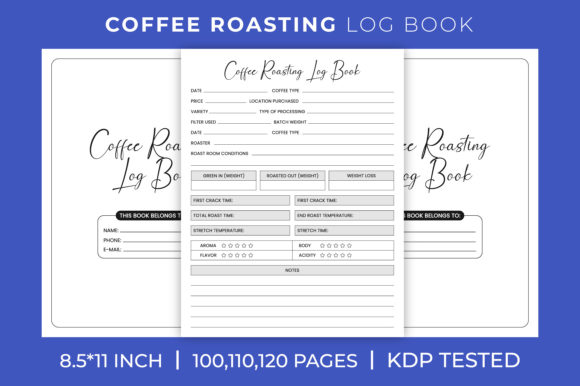
Typically, this product is offered as a bundle of digital files. As described, it usually includes a ready-to-upload PDF file that is tested to meet KDP's printing specifications. An editable EPS source file is often provided for those who wish to make minor customizations using software like Adobe Illustrator. The interior is designed with no bleed, meaning all content is safely within the printable area, and is formatted for the standard trim size of 8.5 x 11 inches. Vendors frequently offer the interior in multiple page counts, such as 100, 110, or 120 pages, all in high-resolution quality. The core content is a structured logbook template dedicated to documenting coffee tasting sessions.
Primary Audience and Core Use Case
The primary market for this product consists of two main groups: KDP publishers and dedicated coffee enthusiasts. For publishers, especially those creating low or no-content books for niche markets, this interior is a tool for rapid product creation. It allows them to tap into the specialty coffee community by offering a tailored product without investing in custom design. For the coffee enthusiast, barista, home roaster, or professional taster, a book built using this interior serves as a dedicated journal. Its purpose is to systematically record details like coffee origin, roast date, brew method, flavor notes, aroma, acidity, body, and aftertaste, transforming subjective experience into comparable data.
Key Benefits and Practical Value
Using a pre-made Coffee Tasting Log Book KDP Interior offers several clear advantages. The most significant is time and resource efficiency. Creating a properly formatted interior with consistent layouts, page numbers, and margins requires skill. This product eliminates that hurdle. The "KDP tested" note is crucial, as it ensures the file will upload without technical errors, preventing costly rejections or printing issues. For the end-user—the person who buys the published journal—the benefit lies in the structured approach. A well-designed logbook encourages consistent recording, which is essential for developing palate memory, comparing different beans and brews over time, and making informed decisions about future coffee purchases or roasting adjustments.
Tradeoffs and Important Considerations
While convenient, there are inherent tradeoffs. The interior is a template, which means its design is fixed. Using the editable EPS file requires professional software and some expertise, so significant customization may not be feasible for everyone. Publishers must also consider market saturation. Since the same interior can be purchased by many sellers, the final published books might look similar, making a unique cover and marketing strategy even more vital for differentiation. For the coffee taster, a pre-formatted log might not capture every specific metric they wish to track. Some might prefer a more flexible, blank notebook or a digital app. The physical book, however, offers a tactile, offline experience that many enthusiasts value.
When Is This KDP Interior a Strong Fit?
This product is an excellent solution in specific scenarios. For an entrepreneur or publisher looking to quickly expand their KDP catalog into hobbyist niches like coffee, gourmet food, or crafts, it is a strong fit. It reduces the risk and investment of creating a product from scratch. For a small coffee roasting business, using this interior to create a branded tasting journal for customers or staff can be a practical add-on product. For the serious home taster who has struggled with inconsistent notes scattered across random pads, a dedicated logbook created from this structured template can significantly elevate their practice. It formalizes the process and creates a lasting reference archive.
Situations Where Alternatives Might Be Better
Alternatives should be considered depending on one's goals. If a publisher's aim is to build a uniquely branded series with distinctive layouts, investing in custom graphic design for a unique interior might yield a more premium product. For coffee professionals in large commercial settings, a digital database or specialized software for sensory analysis might offer more powerful data aggregation and sharing capabilities than a physical logbook. For the casual coffee drinker who only occasionally wishes to jot down a note, a simple notebook or even a notes app on their phone might suffice, making a dedicated 100-page journal unnecessarily complex.
Practical Decision-Making Insights
When evaluating the Coffee Tasting Log Book – KDP Interior, ask practical questions. As a publisher: Do my technical skills match the file types offered (PDF for upload, EPS for editing)? Does the page count and layout align with the price point and customer expectations for my target market? As an enthusiast or business buyer: Does the template's specific sections (e.g., fields for roast level, grind size, score) match the parameters I actually use in my tasting? Is the physical format convenient for my environment—will I use it at a cupping table, in a cafe, or while traveling?
Ultimately, the value hinges on alignment with the user's process. The interior standardizes recording, which is its greatest strength and potential limitation. It provides a common framework, which is excellent for consistency but may not suit every individual's unique methodology. Assessing the specific vocabulary used in the template—like "body," "brightness," "finish"—against your own tasting lexicon is a simple but effective way to gauge fit.
Final Thoughts on Alignment with Goals
Determining whether this product aligns with your needs requires clarity on your primary objective. For publishing, the goal is often efficient, compliant product creation. The Coffee Tasting Log Book KDP Interior directly serves that goal if the coffee niche is your target. For tasting and roasting, the goal is improved learning, comparison, and decision-making. Here, the product serves as a tool to institutionalize that practice. If your current method is informal and you seek structure, it is a sensible step. If your process is already highly customized or digital, it may not integrate well. In both cases, it is a specialized solution for a specialized audience, offering a bridge between the worlds of self-publishing and the meticulous craft of coffee appreciation.