Finding Focus in a Busy World: The Practical Power of a Minimalist Daily Planner
In a world saturated with notifications, complex apps, and endless to-do lists, the allure of simplicity is powerful. A Minimalist Daily Planner isn't just another notebook; it’s a deliberate tool for clarity. It strips away the decorative fluff and overwhelming structures of many planners, offering a clean, focused framework for your day. Its core purpose is to reduce mental clutter, allowing you to direct your energy toward what actually matters.
Where a Simple Design Meets Complex Lives
You might wonder where such a straightforward tool fits into modern life. The answer is: everywhere. The minimalist approach is versatile because it doesn’t impose a rigid system. Instead, it provides a blank canvas—organized yet adaptable—for you to impose your own priorities. Consider the freelancer juggling client projects, hopping between a home office, coffee shops, and video calls. A planner with excessive sections for "weekly goals," "vision boards," and "habit trackers" can become a chore to maintain. A minimalist layout, perhaps just dated pages with clean lines for tasks and notes, becomes a portable command center. It captures the urgent deadline, the invoice to send, and the quick idea for a next proposal, all without forcing the user to fill out irrelevant fields.
The Professional’s Anchor in a Digital Sea
For many professionals, digital tools are indispensable, but they can also be fragmenting. Emails, Slack channels, and project management software scatter information. A physical Minimalist Daily Planner acts as a tactile anchor. An entrepreneur might use it each morning for a "daily download," manually writing the three critical business actions for the day. This act of writing engages a different cognitive process than typing, often fostering greater commitment. Later, during a hectic afternoon, a quick glance at that single page provides a reset, pulling focus back from digital distractions to the handwritten priorities.
Educators and small business owners find utility in its neutrality. A teacher can use it to track parent communications, lesson prep tasks, and administrative deadlines alongside personal errands—all in one flow. The simplicity prevents the planner from becoming a "school-only" tool, acknowledging that work and life are intertwined. For the business owner, the high-resolution, print-ready PDF versions of these planners mean they can economically produce custom versions for their team, aligning daily planning without costly software subscriptions.
Beyond Work: Structuring Personal Intentions
The application extends deeply into personal and creative realms. A blogger or content creator might use a minimalist planner not for tracking posts, but for capturing ideas and managing the *process*. One page could hold the draft outline for an article, another a list of key contacts for collaboration, and a third a simple log of time spent on deep work. The editable Illustrator AI file included with some packages is key here. A creator can slightly modify a layout—adding a small section for "social media metrics" or "content pillars"—to create a bespoke tool that fits their unique workflow, then print it for personal use.
Consider the hobbyist learning a new skill, like gardening or a language. A complex planner with pre-labeled categories feels mismatched. A minimalist daily page, however, is perfect for logging daily practice ("watered seedlings," "reviewed Chapter 5 verbs"), creating a simple, satisfying record of progress. This is where the "365 Pages" feature becomes practical. It provides a full year’s commitment, not just a monthly trial, supporting the long-term nature of personal growth and habit formation.
Why Ready-to-Upload Interiors Matter for Publishers
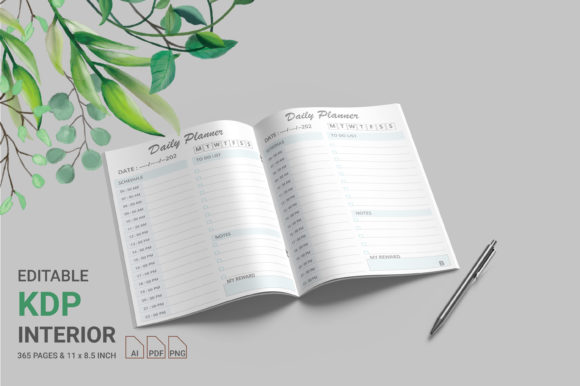
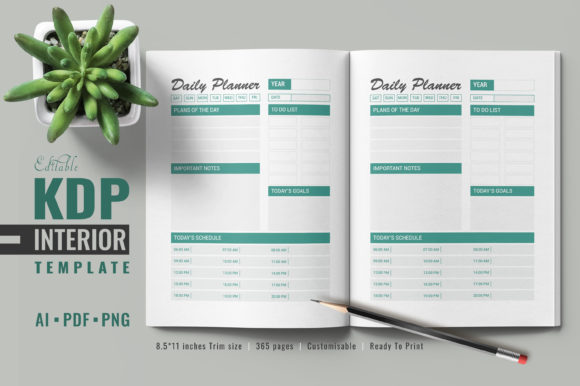
For the audience of publishers and KDP authors, the discussion shifts from using the planner to creating it. The market for physical planners on platforms like Amazon KDP is vast, but competition is fierce. A Minimalist Daily Planner KDP Interior template that is fully editable, in CMYK color mode, and with no bleed for the standard 8.5" x 11" letter size, solves specific real-world problems. It allows a publisher to enter the market quickly without upfront graphic design costs. They can adjust colors, perhaps add a subtle motivational quote at the bottom of each page using the AI file, and have a 100% ready-to-upload product. This isn't about abstract features; it’s about the outcome: turning an idea into a salable physical book within days, not months.
Choosing Your Path to Minimalist Planning
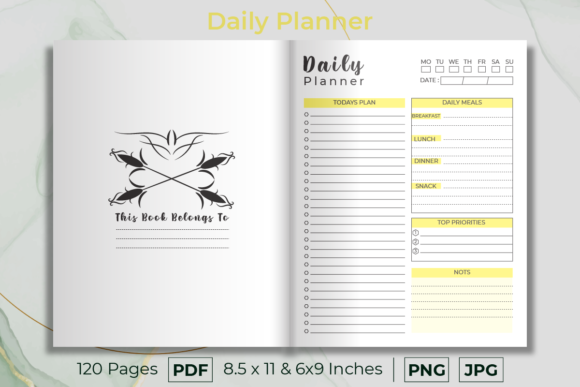
Before downloading a template or purchasing a planner, pause to consider your actual rhythm. Do you need extreme simplicity—just date and blank space? Or do you benefit from a subtle structure, like divided lines for "Morning," "Afternoon," and "Evening"? Look at the included file formats. If you’re a DIY person who loves to tweak, the editable Illustrator AI file is crucial. If you just want to print and go, the high-resolution PNG and PDF files are your solution. The "no bleed" specification is vital for personal printing on home printers; it means all content stays safely within the standard page margins, avoiding cut-off text.
Think about integration. Will this planner be your primary tool, or a complementary one to a digital system? Many users find success by using the planner for strategic daily capture and digital tools for storage, collaboration, and reminders. Also, consider the paper. If you're printing the PDF for personal use, investing in slightly heavier paper stock can transform the experience, making writing feel more intentional and durable.
The true benefit of a Minimalist Daily Planner emerges in its sustained use. Its value isn't in a flashy first day, but in the cumulative effect of weeks of clear, uncluttered daily intention. It serves the marketer planning a campaign launch, the freelancer balancing multiple gigs, the educator managing a classroom, and the individual seeking more mindfulness from their days. By focusing on the essential, it helps users reclaim a sense of direction from the noise, proving that sometimes, the most powerful tool is the simplest one you actually use.